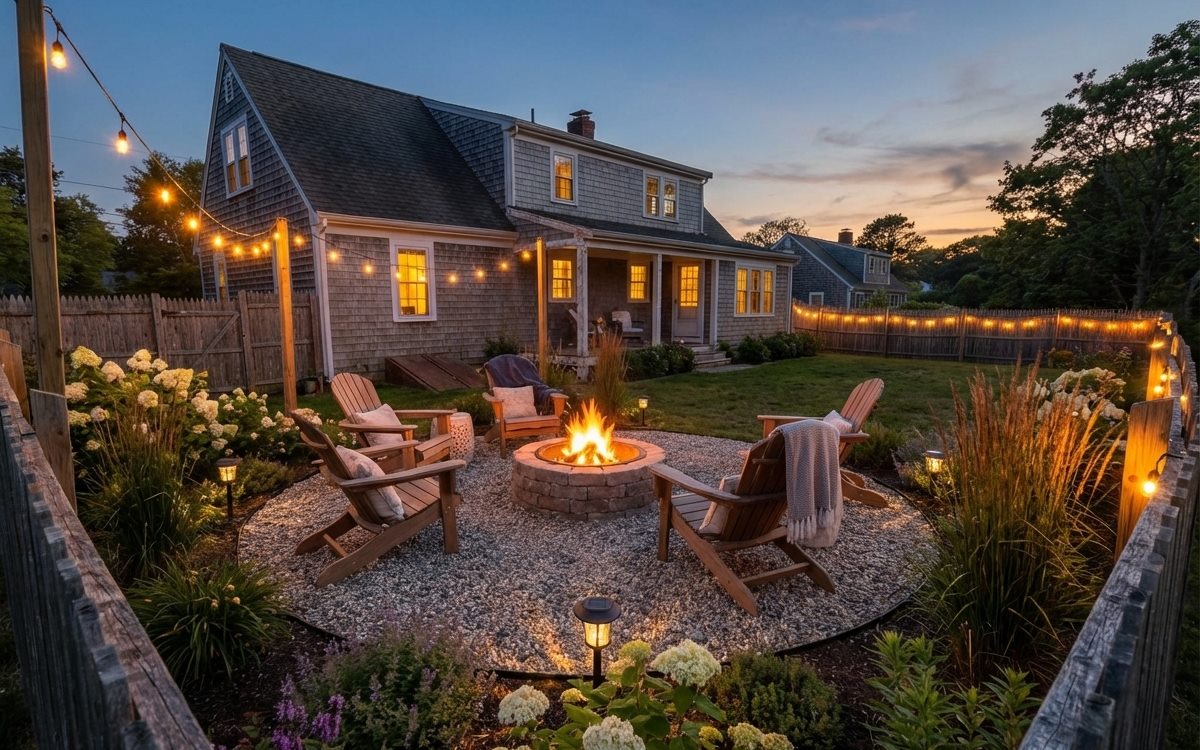
A fire pit turns your backyard from a space you look at into a space you use. It's one of the few outdoor features that gets people outside in spring, summer, and fall, and it doesn't have to be complicated or expensive to build.
Here's a breakdown of the most popular approaches and what to think about before you start.
Ground-Level Fire Rings
The simplest option. A ring of fire-rated bricks or steel set directly on a gravel pad. No mortar, no masonry skills, and usually under $200 in materials.
Best for: Small budgets, renters (some are portable), and backyards where you want flexibility to change the layout later.
Watch out for: Check local fire codes. Many municipalities require fire pits to be at least 10-25 feet from structures, and some require a spark screen.
Built-In Stone or Block Fire Pits
A step up in permanence and appearance. These use stacked retaining wall blocks or natural stone with a steel insert liner. Most are circular, 36-44 inches in diameter, and sit about 12-18 inches high.
This is the most popular DIY fire pit project because the blocks are designed to stack without mortar. A basic kit runs $300-$600 and takes a weekend.
Design tip: Extend the gravel or paver pad at least 4 feet beyond the fire pit in all directions. This gives you a clean, fire-safe zone and a natural place to arrange chairs. That pad is also the least demanding surface in the yard once it's down, which is why it shows up in most low-maintenance landscaping plans.
Sunken Fire Pits
Digging the fire pit below grade creates a dramatic, architectural look. The seating area surrounds a recessed bowl, and the lower flames feel more intimate and sheltered from wind.
This takes more planning and labor. You'll need to manage drainage (water collects in low spots) and may need to line the pit properly. But the result looks like something out of a design magazine.
Gas Fire Pits and Fire Tables
Propane or natural gas fire features offer convenience: instant on/off, no smoke, no ash cleanup. Fire tables combine a burner with a flat surface, so they double as a coffee table when the flame is off.
Trade-off: You lose the crackle and smell of a real wood fire. But for smaller patios, HOA-restricted neighborhoods, or people who want fire ambiance without the maintenance, gas is practical.
See this idea on your own yard photo.
YardRemix turns a quick photo into AI yard concepts, so you can compare layouts, plants, patios, lighting, and budget-friendly options before you start digging.
Choosing the Right Spot
Before you pick a design, walk your backyard and think about:
- Distance from the house: Most codes require 10-25 feet minimum. Check yours before you dig.
- Wind patterns: Put the pit where smoke won't blow directly at your house or the neighbor's.
- Existing trees: Stay well clear of low branches and root zones.
- Views: Orient seating so people face something pleasant, whether that's the yard, a garden, or the sunset. If the pleasant direction happens to be the neighbor's kitchen window, solve that with privacy planting rather than a fence.
- Access: You'll carry firewood, chairs, and drinks out there. Don't make it a trek.
Seating That Works
The fire pit itself is only half the equation. Seating makes or breaks the experience.
- Adirondack chairs are the classic choice. Sturdy, comfortable, and they handle weather well.
- Built-in stone benches look great but aren't comfortable for long without cushions.
- A mix of chairs and a low stone wall gives you flexible seating for different group sizes.
Leave 3-4 feet between the seating and the fire ring. Close enough to feel the warmth, far enough that sparks aren't a concern.
Once the ring and the seating exist, the space earns its keep every October — it's the anchor of every one of these fall backyard party ideas. Building these for clients rather than yourself? YardRemix Pro renders the finished pit on the customer's own site photo, with your logo on it.
See It Before You Build It
One of the biggest challenges with a fire pit project is getting the scale and placement right. It's hard to stand in an empty corner of your yard and imagine how a stone fire pit with surrounding seating will actually look and feel.
This is where Yard Remix can help. Upload a photo of the area and see an AI-generated concept showing what a fire pit setup could look like in your specific space. It won't replace a site plan, but it can help you commit to a location and style with more confidence.
Common questions
How much does a backyard fire pit cost to build?
A ground-level ring of fire-rated brick on gravel runs under $200 in materials. A stacked-block kit with a steel liner is typically $300 to $600 and takes a weekend. Gas fire tables start higher and skip the build entirely.
How far does a fire pit need to be from the house?
Most municipal codes require 10 to 25 feet from any structure, and some also require a spark screen. Check your local fire code before you choose a spot — the setback often decides the location for you.
How much space do I need around a fire pit?
Extend the gravel or paver pad at least 4 feet past the pit in every direction, and leave 3 to 4 feet between the seating and the ring. Close enough for warmth, far enough that sparks aren't a worry.
Turn the idea into a visual plan before you spend a weekend on it.
Open YardRemix in your browser or grab the free app, snap a photo, and test yard designs with AI. It is a faster way to compare styles, avoid expensive guesses, and share a clearer direction with a contractor or helper. Running the job yourself? YardRemix Pro puts your logo on every render.