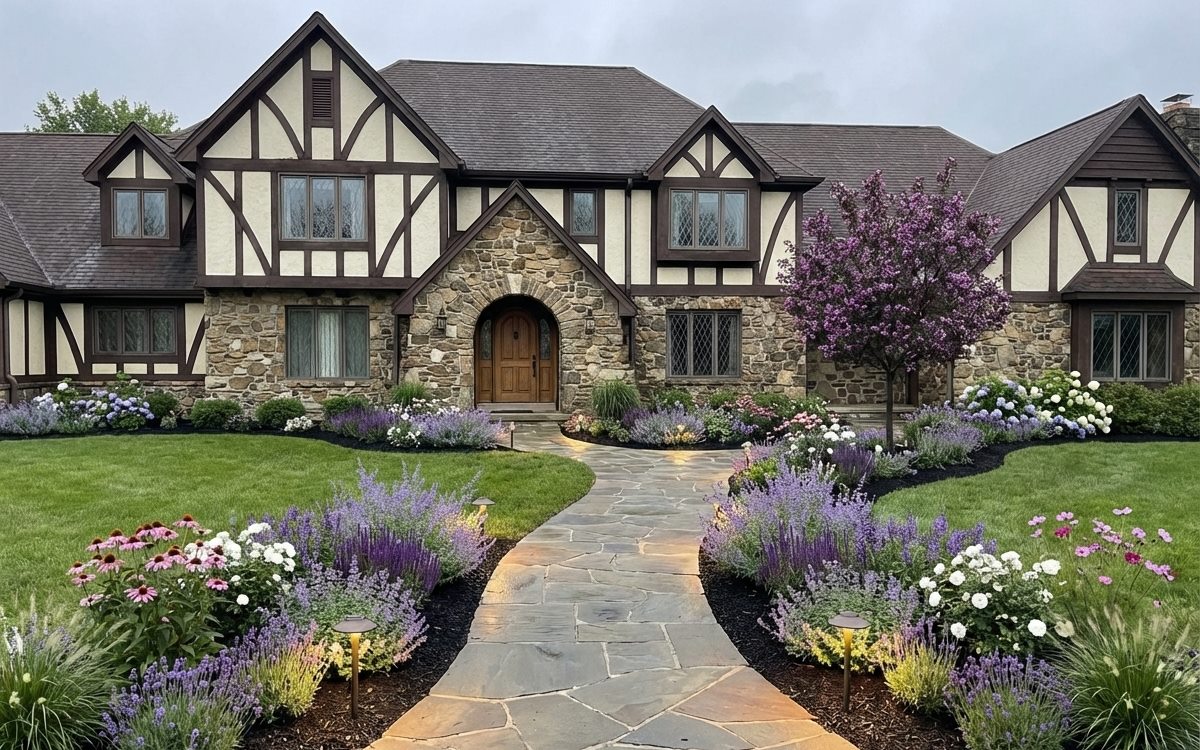
There's something satisfying about a before-and-after transformation. When it comes to front yards, even modest changes can produce a dramatic shift in how a home looks and feels from the street.
But the best makeovers aren't random upgrades. They follow a pattern: identify what's dragging the space down, focus effort on the highest-impact changes, and work with the existing architecture rather than against it.
What Makes a Front Yard Look Dated
Before planning what to add, identify what to fix or remove. Common culprits:
- Overgrown foundation shrubs that block windows and make the house look smaller
- Bare or patchy lawn with no defined edges
- No clear path from the driveway or sidewalk to the front door
- Mismatched or cluttered plantings with no color or height strategy
- Worn-out mulch or exposed soil in garden beds
- Outdated light fixtures and faded house numbers
Removing or correcting these issues often does more than adding new features. Once the subtractions are done, the additions are the familiar list of curb appeal ideas — they just land harder on a yard that has been cleaned up first.
The Foundation Planting Reset
This is the single highest-impact change for most homes. Foundation plantings are the shrubs and plants directly against your house. When they're overgrown, they hide your home's architecture and create a dark, heavy look.
The fix: Remove or aggressively prune overgrown shrubs. Replace with a layered approach:
- Back row (against the house): Compact evergreen shrubs that max out at window-sill height
- Middle row: Flowering shrubs or ornamental grasses for seasonal color
- Front edge: Low groundcover or border plants to define the bed
This three-layer approach creates depth and keeps everything proportional to the house. Choose each layer from plants that actually belong in your climate and the bed stays looking like this with very little help — the core argument of low-maintenance landscaping.
Walkway Upgrades
A cracked concrete path does more damage to curb appeal than most people realize. Upgrading to pavers, flagstone, or even a fresh concrete pour with clean edges makes the entire front yard feel more intentional.
If a full replacement isn't in the budget, consider:
- Pressure washing the existing concrete
- Adding a border of brick or stone along the edges
- Widening the path with stepping stones through adjacent plantings
The walkway should be at least 3 feet wide for comfortable walking, and wider is better if you have the space.
Adding Layers and Height
Flat yards without variation feel boring from the street. Creating visual layers gives the eye something to explore:
- A small ornamental tree in the front yard (off-center from the front door usually works best)
- A low retaining wall or raised bed that adds elevation change
- Ornamental grasses that sway and add movement
- Vertical elements like a trellis, arbor, or tall planter near the entrance
You don't need all of these. One or two vertical elements alongside your foundation plantings can completely change the feel.
See this idea on your own yard photo.
YardRemix turns a quick photo into AI yard concepts, so you can compare layouts, plants, patios, lighting, and budget-friendly options before you start digging.
Color Strategy
The most polished front yards limit their color palette rather than mixing everything. Pick two or three flower colors that complement your home's exterior and repeat them throughout the space.
General guidelines:
- White siding or light brick: Almost any flower color works. Blues and purples feel classic.
- Red or warm brick: White, pink, and purple flowers pop. Avoid red flowers that compete with the brick.
- Dark siding: Bright whites, yellows, and greens stand out. Light-colored foliage creates contrast.
Consistency matters more than variety. Three groups of the same plant in the same color always looks more intentional than six different species.
Lighting Changes Everything
Front yard lighting serves both aesthetics and safety, and it's one of the few upgrades that looks better at night than during the day.
Focus on:
- Path lighting along the walkway (every 6-8 feet)
- Uplighting on one or two feature trees or architectural elements
- Front door area with a clean, well-sized fixture
Solar lights have improved dramatically and eliminate any wiring concerns. For something brighter and more reliable, low-voltage LED kits run on a small transformer plugged into an outdoor outlet.
Planning Your Makeover
The biggest mistake in front yard makeovers is starting without a plan. Buying plants on impulse at the nursery leads to the cluttered, mismatched look you're trying to fix.
Instead:
- Take a photo of your front yard from the street, straight on
- Identify the top 3 problems pulling the space down
- Sketch a rough layout of where you want beds, walkway, and focal points
- Pick a style direction (modern minimal, cottage, structured formal, natural)
- Choose plants that fit the style and your climate
This is where AI visualization tools like Yard Remix can be genuinely useful. Upload your front yard photo, indicate a style direction, and see what the space could look like with different approaches. It's faster than sketching and gives you a realistic sense of scale and proportion that's hard to imagine from a plant tag at the nursery.
If you're the landscaper making this pitch rather than the homeowner receiving it, YardRemix Pro does the same thing with your logo on the render and a share link the client can open from the driveway.
Common questions
What is the single highest-impact front yard change?
Resetting overgrown foundation plantings. Shrubs that have swallowed the windows make a house look smaller and darker, and cutting them back to a layered, window-sill-height planting changes the whole facade for the cost of an afternoon.
In what order should I do a front yard makeover?
Remove and correct first, then structure, then decoration. Fix the foundation plantings and the walkway before buying a single flat of annuals — otherwise the new plants just decorate the old problems.
How wide should a front walkway be?
Three feet is the practical minimum for comfortable walking, and four to five feet lets two people walk side by side. A path that feels cramped reads as an afterthought no matter what is planted alongside it.
Turn the idea into a visual plan before you spend a weekend on it.
Open YardRemix in your browser or grab the free app, snap a photo, and test yard designs with AI. It is a faster way to compare styles, avoid expensive guesses, and share a clearer direction with a contractor or helper. Running the job yourself? YardRemix Pro puts your logo on every render.